Canada Air Quality Update: June 2025
Canada Air Quality Update: June 2025
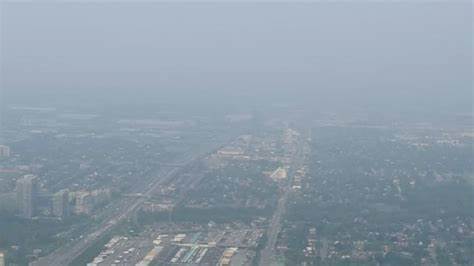
The Big Picture: Wildfires and Air Quality
As of June 11, 2025, Canada’s air quality is under pressure from a record-breaking wildfire season that has already scorched 2.6 million hectares of land. According to Environment Canada, the national Air Quality Health Index (AQHI) has fluctuated between Good (1-3) and High Risk (7-10+) in various regions, driven by PM2.5 (fine particulate matter) and ground-level ozone. The national average AQI was reported at 46-50 (Good) on June 9, with PM2.5 levels ranging from 10-12 µg/m³, but cities near wildfire zones are seeing much worse conditions. Wildfires in provinces like Saskatchewan, Manitoba, and Alberta are releasing massive amounts of PM2.5, which can penetrate deep into the lungs and bloodstream, posing risks for respiratory and cardiovascular health. #AirPollution #WildfireImpact
Air Quality in Major Canadian Cities
Let’s break down the air quality situation in some of Canada’s major cities, based on the latest data:
- Toronto: On June 6, Toronto was ranked among the world’s most polluted major cities due to wildfire smoke from Northern Ontario and Western Canada. The AQHI reached 7/10 (High Risk), with PM2.5 levels spiking to 20-30 µg/m³, well above the World Health Organization’s (WHO) recommended limit of 5 µg/m³ annually. Residents were advised to limit outdoor activities and use air purifiers. By June 10, conditions improved slightly to Moderate (4-6), but sensitive groups like children and the elderly should remain cautious. #TorontoAirQuality
- Montreal: Similarly, Montreal faced poor air quality on June 6, with an AQHI of 7/10 and PM2.5 levels around 20 µg/m³ due to smoke from Quebec wildfires. Despite a 2019 annual average of 10 µg/m³ (meeting WHO guidelines), recent wildfire smoke has pushed levels into the Moderate range. The city’s high number of wood-burning stoves also contributes to winter pollution spikes.
- Vancouver: Vancouver’s air quality is generally good, with a 2019 PM2.5 average of 6-7 µg/m³, but it failed to meet the 2020 Canadian Ambient Air Quality Standards (CAAQS) for nitrogen dioxide (NO2) due to industrial activity and traffic. In June 2025, wildfire smoke from British Columbia has occasionally pushed the AQHI to Moderate (4-6), with PM2.5 levels reaching 15 µg/m³ in some areas.
- Edmonton: Edmonton is grappling with some of the worst air quality in Canada, with an AQHI often hitting 10+ (Very High Risk) due to nearby wildfires burning 1.2 million acres in Alberta. PM2.5 levels have soared to 23 µg/m³ or higher, doubling the WHO’s exposure recommendation. Residents are urged to stay indoors and use HEPA filters.
- Saskatoon: Saskatoon’s air quality has deteriorated significantly due to the 25LA-PISEW fire, with PM2.5 levels reaching 50-80 µg/m³ in early June, pushing the AQHI to 10+. This is among the worst in Canada, with health warnings issued for vulnerable groups.
Health Impacts of Poor Air Quality
PM2.5 and ground-level ozone are the primary culprits behind health risks, especially for children, the elderly, and those with respiratory conditions like asthma or COPD. Short-term exposure can cause symptoms like coughing, throat irritation, and shortness of breath, while long-term exposure is linked to heart disease, lung cancer, and premature death. The economic cost of air pollution in Canada is staggering, estimated at $114 billion annually due to healthcare costs and lost productivity. Wildfire smoke, carrying tiny particles that can travel hundreds of kilometers, is a growing concern as climate change fuels longer and more intense fire seasons. #HealthRisks #AirPollutionEffects
What’s Being Done?
The Canadian government is taking action through the Air Quality Management System and Canadian Ambient Air Quality Standards (CAAQS), which set stricter emission caps for pollutants like NO2, SO2, and PM2.5. Over 3,000 firefighters, including international crews, are battling wildfires, supported by $500 million in federal funding. Communities are also stepping up, with volunteers providing aid to evacuees and technologies like satellite monitoring helping track fire and smoke spread. #WildfireResponse #CleanAirInitiatives
Tips to Stay Safe
Here are some practical steps to protect yourself during this wildfire season:
- Monitor Air Quality: Check real-time AQHI updates on Environment Canada’s website or the WeatherCAN app.
- Stay Indoors: On high-risk days (AQHI 7+), limit outdoor activities, especially for sensitive groups. Use HEPA air purifiers to improve indoor air quality.
- Wear a Mask: A KN95 or N95 mask can reduce exposure to PM2.5 when outdoors.
- Go Green: Use public transit or electric vehicles to reduce urban pollution. Canada offers up to $2,000 in rebates for eco-friendly cars.
- Support Relief Efforts: Donate to organizations like the Canadian Red Cross to help wildfire evacuees. #AirQualityTips #StaySafe
Looking Forward
As climate change intensifies wildfires, Canada’s air quality faces ongoing challenges. Cities like Toronto, Montreal, and Edmonton are feeling the brunt of wildfire smoke, but collective action—through better monitoring, green policies, and community resilience—can make a difference. Let’s stay informed, protect our health, and advocate for a cleaner, safer future. What are your tips for coping with poor air quality? Share in the comments below! 💬 #ClimateAction #CleanAirCanada
#CanadaAirQuality #WildfireSeason2025 #PM25 #HealthyLiving #ClimateChange